
Condition guide · 6 min read
Dog Diarrhea & Sensitive Stomach in Singapore
Written by Eddie, certified nutrition coach, Optimus Pet · Free nutritionist consult on WhatsApp
✦ Recommended for thisAsk a nutritionist, free
Soft stool again. Another food switch. Another trip to the vet, who says your dog is "healthy"… but the poop says otherwise.
If dog diarrhea (also spelled diarrhoea) or a sensitive stomach has you checking every walk with a sinking feeling, you're in good company. Recurring soft stool and "laosai" are among the most common worries Singapore pawrents share, especially with small breeds like poodles, cavapoos, Pomeranians and corgis.
Here's how to tell what's normal, what to do when your dog has diarrhea, what needs a vet, and how to support a calmer, steadier tummy.
Dog diarrhea: when to see a vet right away
Don't wait it out if your dog has diarrhea plus any of these:
- Blood in the stool, or black, tarry stool
- Vomiting, especially repeated vomiting
- Lethargy, weakness or hiding
- Not eating
- A painful or swollen belly
- Puppy diarrhea, or diarrhea in a senior dog or a dog with an existing health condition
- Diarrhea that lasts more than 2–3 days, or keeps coming back
Small dogs and puppies can dehydrate quickly, so when in doubt, call your vet. Snap a photo of the stool to show them.
What does normal dog poop look like? (Stool chart)
Vets often use a 1–7 stool score:
| Score | What it looks like | Meaning |
|---|---|---|
| 1 | Hard, dry pellets | Too hard |
| 2 | Firm, segmented log; easy to pick up | Ideal |
| 3 | Moist log, leaves some residue | Okay |
| 4–5 | Soggy, loses shape when picked up | Soft / loose stool |
| 6–7 | Piles with no shape, or watery puddles | Diarrhea |
If your dog sits at 4 or 5 most of the time, that's the "sensitive stomach" pattern many pawrents describe.
What causes diarrhea in dogs?
- Switching food too quickly. This is one of the most common causes of dog diarrhea and upset stomach. New food should be mixed in gradually over 7–10 days.
- "Dietary indiscretion." Eating rubbish, rich human food, bones, grass or something found on the walk.
- Stress (see below).
- Parasites. Giardia, hookworms, roundworms and others. Your vet can test a stool sample.
- Infections, such as parvovirus in unvaccinated puppies, which is an emergency.
- Medications, especially antibiotics.
- Food sensitivities. Some dogs react to a particular ingredient.
- Other medical problems, such as pancreatitis or inflammatory bowel disease, which need a vet's diagnosis and care.
Dog stress diarrhea
Searches for "dog stress diarrhea" have climbed sharply in Singapore. Boarding, moving house, visitors, fireworks, travel or a family member being away can all upset the gut, often causing sudden soft stool, sometimes with mucus. It usually settles once routine returns. See your vet if it lasts more than 2–3 days, if there's blood, or if your dog seems unwell.
What to do when your dog has diarrhea
My dog has diarrhea but is acting fine
This is one of the fastest-growing questions in Singapore. If your dog is bright, eating, drinking and playful, with no blood and no vomiting, it's often a short-lived upset. A sensible approach:
- Keep fresh water available at all times.
- Don't switch foods yet again. Constant changes can keep the tummy unsettled. Ask your vet about a short-term, easily digestible diet.
- Stop treats and table scraps for a few days.
- Watch the trend. It should be improving within a day or two.
- Call your vet if it lasts more than 2–3 days, comes back often, or any warning sign above appears.
My dog isn't pooping after diarrhea
A day or so without poop after a bout of diarrhea is common, because the bowel has emptied. Call your vet if your dog is straining, vomiting, has a swollen belly, or still hasn't passed stool after 2–3 days.
Everyday habits for a dog with a sensitive stomach
- Pick one good food and stick with it. When you do change, take 7–10 days: about 25% new food on days 1–3, 50% on days 4–6, 75% on days 7–9, then 100%.
- Measure meals. Overfeeding can cause loose stool too.
- Limit treats, and keep them consistent. A common vet rule of thumb is no more than about 10% of daily food.
- Keep up deworming as your vet advises.
- Supervise walks. Singapore's void decks and parks are full of tempting food scraps.
- Plan for stress. Bring familiar food and bedding when boarding or travelling.
Supporting healthy digestion from the inside
Once your vet has ruled out medical problems, the goal is a consistent routine with gentle, daily nutritional support.
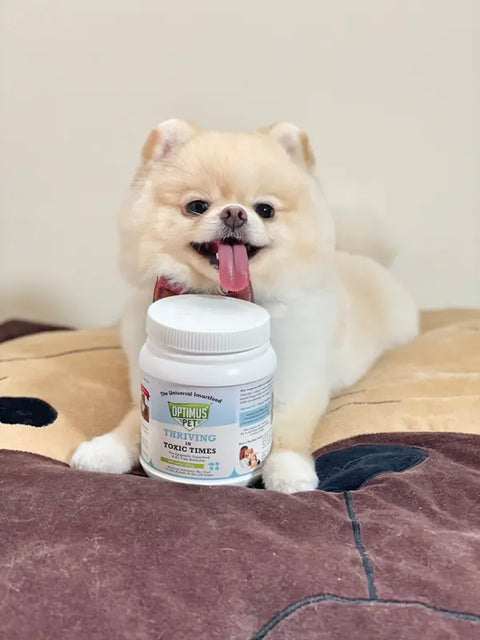
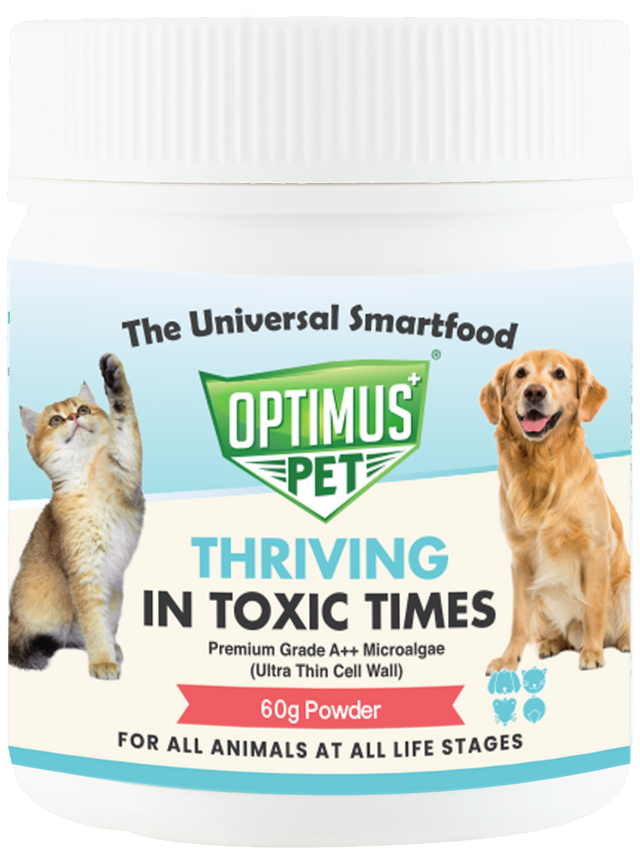
Optimus Pet Blue Series is a single-ingredient microalgae supplement, made in Taiwan. It's designed to support healthy digestion, along with skin, coat and overall vitality.
- One ingredient. Nothing extra for a sensitive stomach to react to.
- Easy to add. A small tablet, or a powder mixed into the food your dog already eats, so there's no need to switch diets again.
- Fits into a vet's plan, not instead of it.
Start slowly. As with anything new for a sensitive tummy, begin with a small amount and build up over about a week. Give it consistent daily use for several weeks before judging the results. Darker green stools in the first days are normal: that's the natural colour of microalgae.
Buy genuine only from optimuspetsg.com or our official Shopee store (theorganicsanctuary).
Itchy skin too? Gut and skin are closely linked. Read our guide to dog allergy & itchy skin.
Dog diarrhea FAQ
What should I do when my dog has diarrhea?
Keep fresh water available, stop treats and table scraps, avoid switching foods again, and watch whether it improves within a day or two. See a vet right away if there's blood, black stool, vomiting, lethargy or loss of appetite, or if it lasts more than 2–3 days.
My dog has diarrhea but is acting fine. Should I worry?
If your dog is bright, eating and drinking, with no blood or vomiting, it's often a short-lived upset. Call your vet if it lasts more than 2–3 days or keeps coming back.
Can stress cause diarrhea in dogs?
Yes. Boarding, travel, visitors, fireworks or changes at home can all cause stress diarrhea. It usually settles once routine returns, but see a vet if it lasts more than 2–3 days or there's blood.
Will a supplement stop my dog's diarrhea?
No supplement should promise that. Optimus Pet supports healthy digestion as part of a consistent diet. If your dog has diarrhea right now, especially with any warning signs, see your vet first.
Is the Blue Series a probiotic?
No. It's a single-ingredient microalgae supplement. If your vet has recommended a probiotic, ask them before combining products.
Is it suitable for cats?
Yes. The Blue Series is for dogs and cats. Cats with vomiting, diarrhea or appetite changes should see a vet.
This page is for general information and is not veterinary advice. Optimus Pet products are food supplements and are not intended to diagnose, treat, cure or prevent any disease. Please consult your veterinarian about your pet's health.
Sources
CancerSupport through treatmentAllergy & itchy skinScratching, paw licking, red earsKidney diseaseThirst, weight loss, senior petsLiver healthDetox, appetite, jaundiceJoints & arthritisStiffness, limping, slowing downDiabetes & blood sugarThirst, weight, blood sugarHeart healthCoughing, tiring, circulation