The superfood from the future · free nutritionist consult
Condition guide · 4 min read

Cancer in dogs & cats

By the Optimus Pet nutrition team · Free nutritionist consult on WhatsApp
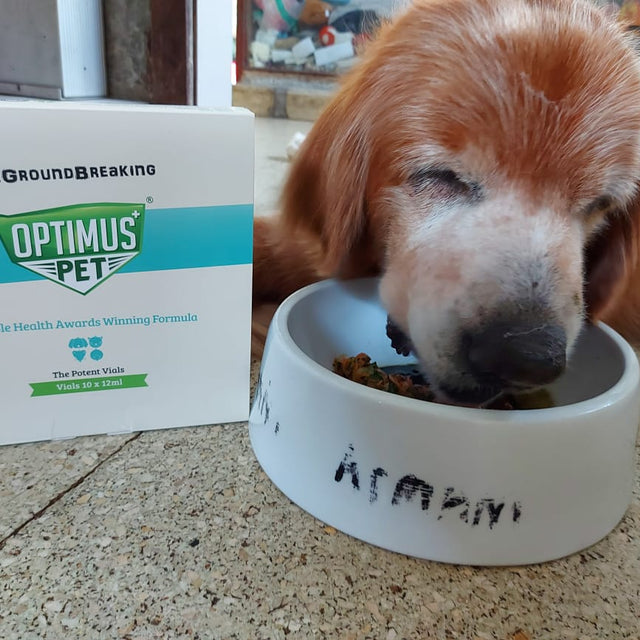
A senior golden retriever eating from a bowl beside a box of The Potent Vials
✦ Recommended for thisAsk a nutritionist, free

Cancer is one of the most common serious illnesses in pets, and the risk climbs with age. Here's what to watch for, what raises the risk, and how a daily whole-food routine can support your pet's body through it.

How common is it?

About 1 in 4 dogs will develop cancer at some point in their life, and that rises to 1 in 2 for dogs aged 10 or older. Cancer is less common in cats, but it's still a significant concern for them too.1

Warning signs to watch for

  • Lumps or bumps that grow, or change colour or texture
  • Loss of appetite or unexplained weight loss
  • Sores or wounds that won't heal
  • Persistent vomiting or diarrhoea
  • Difficulty eating, swallowing or breathing
  • Bleeding from the mouth, nose or other openings
  • Unexplained swelling, heat, pain or lameness
  • Behaviour changes, like hiding or losing interest in favourite things

Spotting changes early gives your vet the most options, so if any of these last more than a week or two, get them checked.1
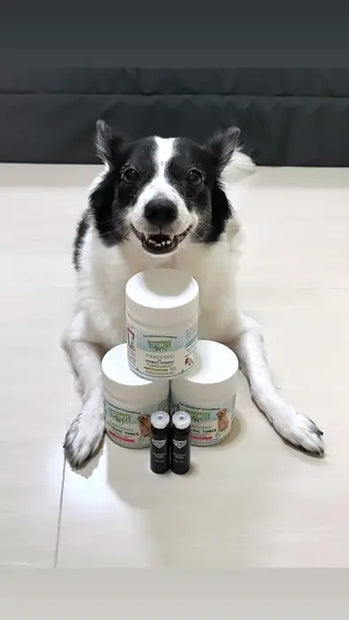
A smiling dog behind a stack of Optimus Pet jars and vials
When appetite dips, small nutrient-dense servings can be easier than a full meal.

What raises the risk?

Age and genetics play the biggest part, and some breeds are more prone to certain cancers. Everyday exposures matter too: second-hand smoke, pesticides and lawn chemicals, excess weight and long-term inflammation all put extra strain on the body's cells. We believe a nutrient-poor, highly processed diet makes that strain harder to handle.

What you can do at home

  • Do a monthly nose-to-tail check. Feel for new lumps, and photograph any you find next to a coin so you can see if they change.
  • Weigh them every month. Unexplained weight loss is often one of the first signs something is wrong.
  • Keep them lean. Excess weight keeps the body in a state of low-level inflammation.
  • Cut the everyday exposures. Keep pets away from second-hand smoke and freshly treated lawns.
  • If your pet is diagnosed, ask your vet: what type and stage it is, what the goal of treatment is, and how to manage nausea, pain and appetite at home.

How Optimus Pet fits in

A pet facing cancer, or its treatment, needs every bit of good nutrition it can get, often while its appetite is at its lowest. Optimus Pet is one ingredient, human-grade microalgae, so it delivers a lot in a small amount:

  • Dense, easy nutrition. Complete amino acids, omega fats, vitamins, minerals and antioxidants, in tiny single-cell form that's gentle on the stomach. It can be crushed into food or mixed with water when eating is hard.
  • Energy support. Fatigue is one of the hardest parts of illness and treatment. Our natural gene activators are designed to support mitochondria, the cell's power plants, to help keep energy up.
  • Antioxidant and immune support. Natural antioxidants help shield organs from free-radical damage, and the formula has been recognised with health awards for immune modulation.
  • Before, during and after treatment. Because it's food, not a drug, many families give it right through their pet's treatment plan.

Research into omega-3 fatty acids and cancer in pets is still emerging, with too few studies so far to set firm guidelines.2 Optimus Pet supports the whole body; it isn't a cancer treatment, and it works best alongside your vet or oncologist.

Which formula?

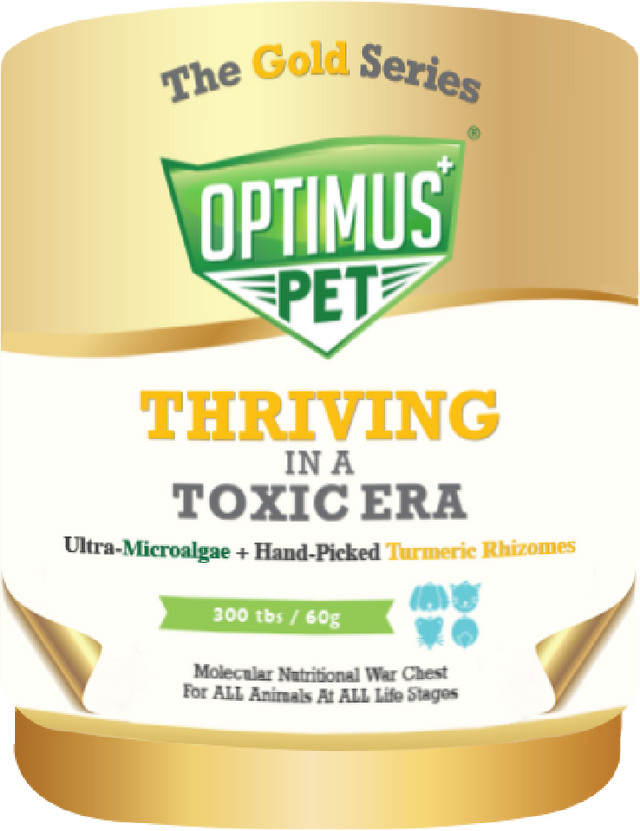
For pets facing serious illness we recommend The Potent Vials, our most concentrated form, with the highest levels of natural gene activators, alongside The Gold Series, which adds organic turmeric for extra antioxidant and anti-inflammatory support. Our nutritionists can tailor amounts to your pet.

Working with your vet

Optimus Pet is a whole food, so it sits alongside your vet's plan rather than replacing it. Keep your vet in the loop about everything your pet eats and takes, and book a check-up whenever symptoms are new, severe or getting worse. Our nutritionists can help you fit Optimus Pet around your pet's current care, free of charge.

Sources

  1. AVMA: Cancer in pets
  2. Vendramini et al., Nutrition Research Reviews (2025): omega-3 supplementation for companion animals
✦ From our nutrition team

Watch & learn.

Short videos that answer the questions we hear most. Tap to watch with sound.

Health

Help for common illnesses

  • How it supports the whole body
Safety

Safe for all pets

  • Every companion, every age
Science

Gene activators, explained

  • The revolutionary health formula
✦ Real results

Hear it from Optimus Pet families.

Every pet is different, and results vary. Tap a story to hear it from their family.

What owners have reported to us
  • Better appetite
  • More energy
  • Help with old-age problems
As featured by a vetDr. Christopher Tham, Jireh Veterinary Clinic

A veterinarian specialising in oncology and orthopaedics shares several pet patients' recoveries attributed to Optimus Pet.

Cat

Weight & appetite

  • Weight
  • Appetite
Cat

Pichu

  • More energy
  • Appetite
  • Tummy
Cat

Oyen

  • Fur regrowth
  • Mood
  • Energy
More conditions
Added to cart View cart →